Announcements
If your parish or organization is sponsoring a Eucharistic Event, Workshop or Eucharistic Congress, email us information about what you have planned at least one month in advance, along with who to contact, and we will list your event here.
Please Join Us at
~ EWTN LIVE ~
on January 7, 2009
The Real Presence Eucharistic Education and Adoration Association
will have as their guest speaker
Fr. Thomas A. Milota
from SS. Peter and Paul Church in Naperville, Illinois
on EWTN LIVE January 7, 2009
to talk about the
Vatican International Exhibition of the Eucharistic Miracles of the World.
The Fr. John A. Hardon, S. J. Library
at the
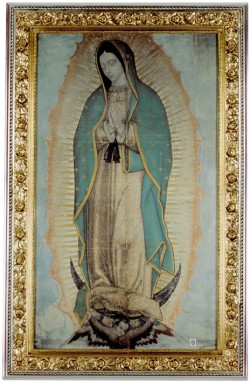
Shrine of Our Lady of Guadalupe
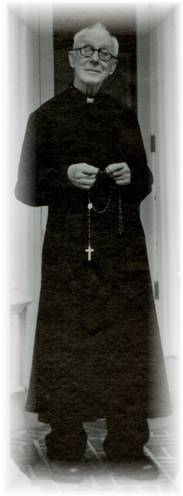
In 1999, a year before his death,
Father John A. Hardon, S.J. visited Most Reverend Raymond L. Burke (then Bishop
of La Crosse Diocese) and approved of the Bishop's plan to build a Marian Catechetical
Center at the Shrine complex. After Father Hardon's death, Archbishop Burke
(St. Louis Diocese) assumed the spiritual directorship of the Father Hardon
apostolates of which The Real Presence Eucharistic Education and Adoration Association is one and proceeded
directly to fulfill his commitment to Father Hardon.
The Marian Catechetical Center will consist of a
variety of resources for the study of catechetics, classrooms for instruction
in spirituality and doctrine, and facilities for Catholic radio broadcasting.
A library, dedicated to the memory of Father Hardon, will contain many of his
treasured materials. The Shrine has already received some of his clothing and
prayer materials. Other personal library possessions of Father Hardon are intended
to be transferred to the Shrine once proper facilities can be constructed. To
receive and preserve the original writings of Father Hardon, the Catechetical
Center will have a museum-quality archiving room on site.
Time is of the essence in constructing the Catechetical
Center. Of primary importance is the need for a center to fully engage the evangelization
resources available through the Marian Catechist Apostolate; of equal concern
is the degree of risk associated with so many of Father Hardon's works – currently
spread across a variety of locations and not yet secured in an environment of
preservation.
The Capital Campaign is underway and an estimated
$5M is needed for the construction of the Center. Those who benefit from the
works of the Father Hardon Apostolates are particularly requested to come forward
to assist Archbishop Raymond L. Burke in this worthy endeavor. No amount is
considered too small.
To learn more about the Shrine you may visit their website: http://www.guadalupeshrine.org/Home/Home.asp
All contributions are to go directly to the Shrine.
If you care to discuss your donation, you may contact Sister Christa Marie at
608-788-8601.
Sister Christa Marie, F.S.G.M., Executive Director
Shrine of Our Lady of Guadalupe
P.O. Box 1237
La Crosse, WI 54602-1237
Tel: 608-782-5440
Apostolates for Eucharistic Adoration
Interested in Eucharistic Adoration?
Want to expand your search for more information?
The Apostolates for Eucharistic Adoration section
will allow you discover the many people and places
waiting to serve you
in a variety of ways.

Recent Website Additions
- Catholic Catechism on Homosexuality by Fr. John A. Hardon, S.J., has been added to the Hardon Archives - Chastity section. "Over the centuries, the Church has often issued decrees defending Catholic morality. Among these decrees more than one has condemned the practice of homosexuality. Until recent years, however, the more common term used by the Church was "sodomy" and not homosexuality. The reason for the shift in vocabulary has been mainly the widespread denial that sodomy is anywhere formally condemned by Sacred Scripture. Another reason is that homosexuality has become so prevalent in the modern world that one psychological science after another has developed a library of literature defending the practice of homosexuality." (12-20-2008)
- The Fourth Commandment by Fr. John A. Hardon, S.J., has been added to the Hardon Archives - Commandments section. "Since the dawn of Christianity however, the Church has consistently interpreted the fourth commandment as prescribing obedience to all legitimate authority. Summarily, especially to three forms of authority: obedience of children to their parents in domestic society, the obedience of citizens to civil authority, and the obedience of the faithful to the authority of the Church in ecclesiastical society." (12-7-2008)
- The Fifth Commandment – Sanctity of Human Life by Fr. John A. Hardon, S.J., has been added to the Hardon Archives - Commandments section. "The present meditation is on the fifth commandment, the first of seven meditations. The present is on the sanctity of human life. Never in the history of the world has there been more need to believe in the fifth commandment of God than today. The simple imperative, "Thou shall not kill" was already broken at the dawn of human history. Cain murdered his brother Abel out of envy. So the story of the human race goes on." (12-6-2008)
- The Growth of Catholic Doctrine by Fr. John A. Hardon, S.J., has been added to the Hardon Archives - Church Dogma section. "The Church, we believe, is the living Body of Christ. We therefore believe she grows, not only in numbers or in influence, but also in her own being. Objectivity, therefore, what God revealed to the human race is an unchangeable constant. The mystery of the Holy Trinity, the Incarnation of the Son of God, the seven sacraments He instituted, the Real Presence of Christ on earth in the Holy Eucharist, the moral obligations of the Sermon on the Mountall of these are irreversible truths. Saying this, however, does not mean that the Church's understanding of Christian revelation does not grow. Nor does it mean that her grasp of the deposit of faith does not become more clear, more precise, more certain and more intelligible with the passage of time." (12-6-2008)
- Guidelines for the Eucharistic Formation of the Young by Fr. John A. Hardon, S.J., has been added to the Hardon Archives - Apostolates section. "Our closing reflections in this conference concentrate on how we — parents and teachers, priests and religious — are to become apostles of the Eucharist in our day. What is an apostle of the Eucharist? An apostle of the Eucharist is one who has certain Eucharistic qualities, eight to be exact." (12-6-2008)
- Gentleness by Fr. John A. Hardon, S.J., has been added to the Hardon Archives - Beatitudes section. "In the spirit of the Gospel we have just read from St. Matthew and in the context of so much that our Savior has been teaching us we should reflect on the virtue of gentleness. As Isaiah foretold of the Savior, He will not break the bruised reed He will not condemn, He will not cry out. Gentleness is written on almost every page of the Gospels describing the Savior. Yet there are certain virtues that are as we might expect popular in certain times. No doubt because they conform with the spirit of those times." (12-6-2008)
- Following the Spiritual Exercises by Fr. John A. Hardon, S.J., has been added to the Hardon Archives - Spiritual Exercises section. "The Spiritual Exercises were written by St. Ignatius Loyola over a period of some ten years, from 1521 to 1533. They are based on three principal sources: Sacred Scripture, personal experience, and certain masters of the spiritual life, notably Thomas a Kempis, the author of Imitation of Christ." (12-6-2008)
- The Fifth Commandment and Charity by Fr. John A. Hardon, S.J., has been added to the Hardon Archives - Commandments section. "Our focus in reflecting on charity will be to see how our Lord elevated the Old Testament precept. There was a precept of charity already in the Old Law. In sequence, we will look briefly at the Old Testament precept of charity and then the four ways in which our Lord elevated the (what we now so casually call) Christian charity: by elevating the norm, elevating the means, elevating the scope and elevating the purpose of charity." (12-6-2008)
- The Fifth Commandment and Envy by Fr. John A. Hardon, S.J., has been added to the Hardon Archives - Commandments section. "Our present meditation therefore, will be on envy, where the word itself comes from the Latin, envidia, for which we have the English equivalent "envidious", or more commonly, envious. We ask ourselves the following four questions: What is Christ’s teaching on envy? What is envy? What are some of the consequences of envy? And this being a retreat; what are the remedies for the vice? And it is a vice, the vice of envy." (12-2-2008)
- Evanston and Church Disunity by Fr. John A. Hardon, S.J., has been added to the Hardon Archives - Christian Unity section. "For the sake of convenience we shall limit our study to a single document, the most important issued by the Evanston conference, which was drafted by the Committee on Faith and Order, voted on by the delegates and "commended to the Churches for appropriate action." Condensed into four thousand words, it is the only strictly theological statement emanating from the 1954 World Council, and deals specifically with the core problem of the ecumenical movement under the title, "Our Oneness in Christ and Our Disunity as Churches." In order to do it full justice; we shall first summarize, with quotations and without comment, the main ideas of the Evanston declaration, and then give a critical evaluation of its doctrine on church unity from the Catholic standpoint." (12-1-2008)
- Evanston and Rome by Fr. John A. Hardon, S.J., has been added to the Hardon Archives - Christian Unity section. "The Evanston Assembly of the World Council of Churches might have been expected to take a stand regarding the Catholic Church. From the earliest years, the shadow of Rome hovered over the first beginnings of the Council. In 1919 when the founders of the future Council were canvassing for member churches, they called on the Holy Father and invited his co-operation, which he courteously declined." (11-30-2008)
- The Eucharistic Crusade in the United States by Fr. John A. Hardon, S.J., has been added to the Hardon Archives - Eucharist section. "The Eucharistic crusade is a special part of the Apostleship of Prayer. It concentrates on the spiritual and doctrinal formation of children and adolescence. Through the Eucharistic crusade young people are prepared to live an above ordinary Christian life and become trained in the apostolic spirit of bringing others to know and love Jesus Christ." (11-29-2008)
- Evangelization, the New Catechism, and Pope John Paul II by Fr. John A. Hardon, S.J., has been added to the Hardon Archives - Evangelization section. "No other aspect of the Church’s teaching has grown more rapidly and more profoundly than her grasp of the meaning of evangelization. In order to begin to appreciate what this means, it will be useful to see how the concept of evangelization has developed from the pontificate of Pope Paul VI to that of John Paul II. Then we shall look briefly at the teaching of the Catechism of the Catholic Church to see what it says about evangelization. Finally and mainly we will examine how Pope John Paul II applies the latest understanding of evangelization to awaken the sleeping giant of the Catholic Church. The Pope foresees the twenty-first century as the dawn of the greatest renaissance in Christian history, on one condition. Believing Catholics must be aroused from their stupor and inspired to proclaim Jesus Christ and His Kingdom as has not been done since the dawn of Christianity." (11-22-2008)
- Eucharist, Worship and Custody by Fr. John A. Hardon, S.J., has been added to the Hardon Archives - Eucharist section. "The worship and custody of the Holy Eucharist, independently of Mass and Holy Communion, can be traced to post-apostolic times. St. Justin, writing in his Apology around the year 150, says that deacons were appointed to carry the Blessed Sacrament to those who were absent from the liturgy. The young St. Tarsisius was taken captive and put to death while carrying the consecrated Species on his person." (11-22-2008)
- The Eucharist, Source and Summit of the Christian Life by Fr. John A. Hardon, S.J., has been added to the Hardon Archives - Eucharist section. "The moment we say that the Eucharist is the source and summit of the Christian life, we are faced with an avalanche of ideas that contradict this statement. It was this concern about the Eucharistic errors in our day that occasioned Pope Paul VI to issue his historic encyclical Mysterium Fidei, the Mystery of Faith, during the Second Vatican Council. The pope foresaw two major errors which threatened the Real Presence of Christ in the Eucharist." (11-22-2008)
- The Fifth Commandment and Anger by Fr. John A. Hardon, S.J., has been added to the Hardon Archives - Commandments section. "As narrated by Saint Matthew in Christ's several chapter discourse in the Sermon On the Mount, our plan is to look at this very simple but complex subject of our faith under five perspectives. First, just to hear the words of our Lord, then briefly to explain or comment, if you wish, on the meaning of what our Lord was saying when He gave us His version of the fifth commandment. Third, we will ask ourselves and explain in the Church’s language what is anger. Fourth, what are the recognized effects of anger and finally how are we to cope with our irascible tendencies. In a word, how are we to not merely master but actually profit from the sinful tendency that we all have to anger." (11-22-2008)
- Evangelium Vitae: Spiritual Combat with the Culture of Death by Fr. John A. Hardon, S.J., has been added to the Hardon Archives - Evangelization section. "The present century is the most violent and murderous in the history of the human race. There have been more death casualties in wars fought since 1900 than in all the previous centuries since the dawn of the human race. There are now more legalized murders of unborn children in one year than in all the ages of the world up to the beginning of the twentieth century. What makes this world of ours so murderous is not only the number of willful homicides of innocent people. It is the fact that one once civilized nation after another has legalized these crimes, and defends this demonic attack on human beings and what is by now a library of books and an ocean of media that have perverted the minds of millions in countries like the United States." (11-22-2008)
- Faith and Reason, and the Teaching Authority of the Church by Fr. John A. Hardon, S.J., has been added to the Hardon Archives - Heresies and Heretics section. "We commonly think of the Church’s teaching authority in connection with controversies that arise among Catholic scholars or when some issue touching on faith or morals threatens the integrity of the Christian religion. No doubt the Church is called upon to exercise her magisterium (teaching authority) in circumstances that externally are controversial or that practically are dangerous to the spiritual well being of the faithful. On closer analysis, however, these occasions when the Church, as it were, steps in with her hierarchical authority are really situations in which some aspect of faith and reason is involved." (11-22-2008)
- Feminism and the Language Wars of Religion by Fr. John A. Hardon, S.J., has been added to the Hardon Archives - Heresies and Heretics section. "The roots of the feminism, as we know, are at variance with Christian principles. It argues from a massive discrimination of women by men, and urges women to revolt against men. The most famous proponent of this ideology was Karl Marx and his disciple, Nikolai Lenin. They urged "a revolution depends upon the degree of participation by women." On these terms, women’s liberation is simply part of the larger struggle for the eventual creation of a classless society." (11-22-2008)
- Election Prayer by Fr. John A. Hardon, S.J., has been added to the Hardon Archives - Prayer section. "Lord Jesus Christ, You told us to give to Caesar what belongs to Caesar, and to God what belongs to God. Enlighten the minds of our people [in] America. May we choose a President of the United States, and other government officials, according to Your Divine Will. Give our citizens the courage to choose leaders of our nation who respect the sanctity of unborn human life, the sanctity of marriage, the sanctity of marital relations, the sanctity of the family, and the sanctity of the aging. Grant us the wisdom to give You, what belongs to You, our God. If we do this, as a nation, we are confident You will give us an abundance of Your blessings through our elected leaders. Amen." (10-25-2008)
- The Sacrifice Sacrament of the Holy Eucharist by Fr. John A. Hardon, S.J., has been added to the Hardon Archives - Mass section. "The purpose of our present meditation is to explain how the Mass is the sacrifice sacrament of the Eucharist. Again, we will draw on the church’s teaching on the Mass, especially focusing on definitions from the Council of Trent in the sixteenth century. We will also examine Pope Pius XII’s teachings on the Mass, upon which the Second Vatican Council built its base document on Eucharist liturgy." (10-18-2008)
- The Eucharist as the Living Christ by Fr. John A. Hardon, S.J., has been added to the Hardon Archives - Eucharist section. "Let us focus on two features of this mystery: first reflecting upon the Eucharist as Reality and secondly as Presence. What is this Reality to which the Church strongly directs our attention?
This Reality is God present in a different special way. The essence of what we believe here is that God is present as man. The Eucharist began with the Incarnation, in the womb of Mary. Except for her there would be no Jesus and without Him there is no reality to speak of, in the Eucharist. The Eucharist is unqualifyingly Jesus Christ!" (10-18-2008)
- The Eucharist and Vocations by Fr. John A. Hardon, S.J., has been added to the Hardon Archives - Religious Life section. "The Eucharist, therefore, is the best way to foster vocations. This means that persons who attend Mass, receive Communion and invoke Christ in the Blessed Sacrament obtain light and strength that no one else has a claim to." (10-18-2008)
- The Essential Message of Fatima by Fr. John A. Hardon, S.J., has been added to the Hardon Archives - Miracles section. "On May 13, 1982, Pope John Paul II offered the Sacrifice of the Mass in Fatima, during his pilgrimage of gratitude to Portugal. During the Mass, the Pope preached a lengthy homily on "Mary’s Maternal Love." This homily I consider the most authoritative explanation of the meaning of Fatima that we have received from now seven Roman Pontiffs since the first revelations made at Fatima in 1917." (10-18-2008)
- The Eighth Commandment and Lying by Fr. John A. Hardon, S.J., has been added to the Hardon Archives - Commandments section. "The eighth commandment of the Decalogue in the Old Testament is worded almost identically in Exodus and Deuteronomy, in both of which books we have the text of the Decalogue. It says: "You shall not be a false witness against your neighbor." (10-18-2008)
- Confession and Vocations by Fr. John A. Hardon, S.J., has been added to the Hardon Archives - Sin section. "The sacrament of confession is closely related to priestly and religious vocations. It is not too much to say, in most cases, the sacrament of penance is a condition for recognizing, following, and remaining faithful to a vocation. How so?" (10-18-2008)
- The Classics, the Incarnation and Christianity by Fr. John A. Hardon, S.J., has been added to the Hardon Archives - Education section. "For our basis of integration we shall take a body of religious facts which are frequently met in Latin and Greek. These will be evaluated with a view to profiting the student both academically and spiritually, and doing this by drawing upon the very essence of the pagan and Christian religions. As the subject of integration we shall use the transformation of gods into men and men into gods, which run as a theme through all the ancient classics." (10-04-2008)
- Chapter I: Praying the Mass by Fr. John A. Hardon, S.J., has been added to the Hardon Archives - Mass section. "I doubt if any single aspect of the Catholic Church since the Second Vatican Council had caused more confusion and worry among the faithful than the Eucharistic Liturgy. From many parts of the Western world come reports of not a few Catholics who have simply stopped going to Mass, others who insist on having the Mass celebrated only in Latin and adoring to the Tridentine Ritual. How many times I have been seriously asked by people whether the present celebration of Mass in the vernacular and following one of the new canons was valid. I have heard of people walking out of Sunday Mass, and there are movements and publications crusading for a return to the pre-Vatican liturgy and some even daring to question the authority of the Second Vatican Council because it sanctioned what these people call a betrayal of Catholic liturgical piety
Whatever else the Mass is, it is meant by Christ to be a prayer, in fact, the most sublime prayer that a creature can make to the Creator and the one most pleasing to God." (10-01-2008)